
⬤ Watch 🎧Listen
Tata Motors PV Shares Plunge 4% Amid JLR’s 43% Q3 Sales Crash Post-Cyberattack

Cyber disruption halts luxury production, ignites stock selloff, and exposes vulnerabilities in Tata’s global auto empire.
Tata Motors’ passenger vehicle shares dropped nearly 4% on January 6, 2026, erasing recent gains as Jaguar Land Rover (JLR) disclosed catastrophic Q3 FY26 wholesales, down 43.3% year-over-year due to a crippling cyberattack that halted manufacturing.
Cyberattack’s Devastating Impact on JLR
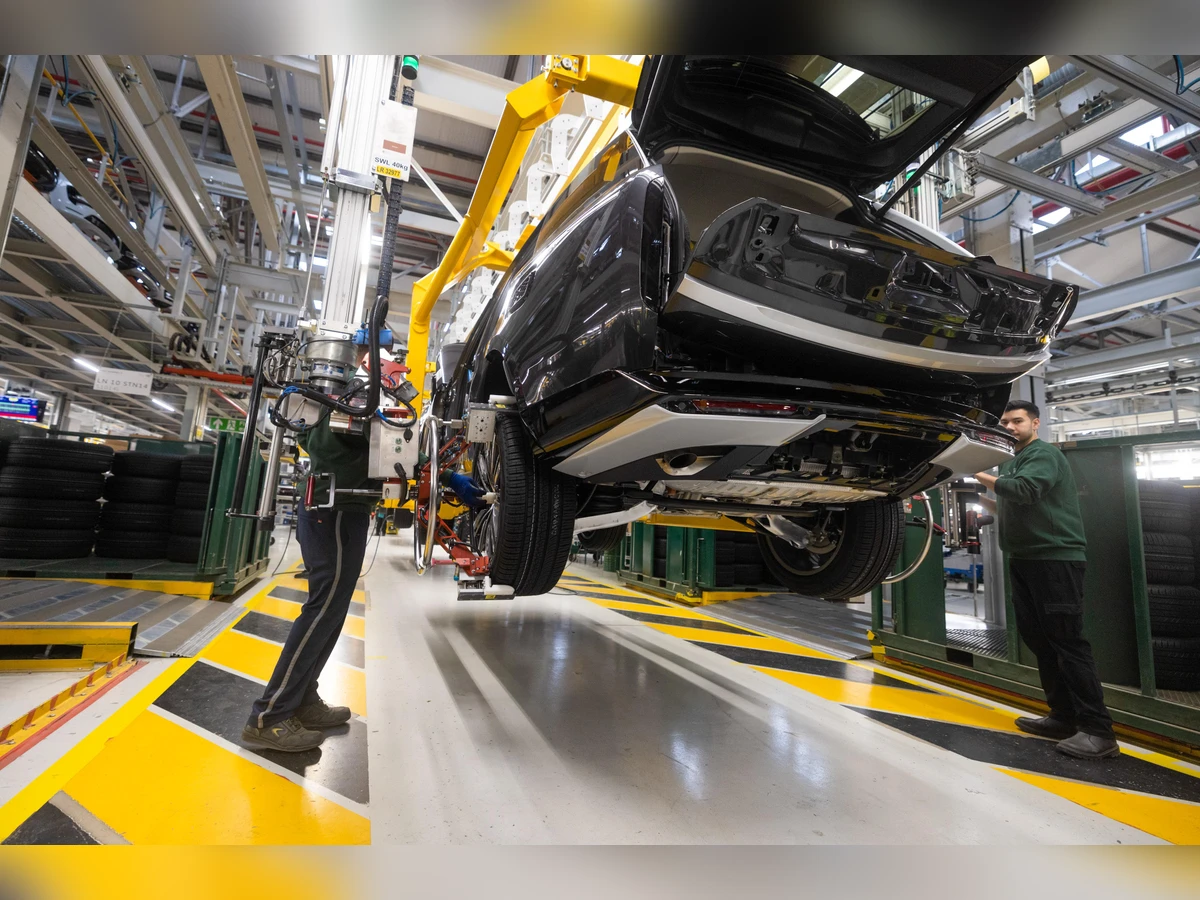
A sophisticated cyber incident in late 2025 forced JLR to suspend operations across UK plants like Solihull, Halewood, and Castle Bromwich, slashing Q3 wholesales to just 59,200 units from 104,000+ in Q3 FY25. Retail sales fared slightly better at 79,600 units (down 25.1% YoY), but declines hit every region, including China via CJLR, as supply chain chaos rippled globally. JLR CEO Adrian Mardell confirmed the outage previously flagged in November updates directly caused the plunge, with recovery efforts ongoing but Q4 wholesales still pressured.
Production halts lasted weeks, idling thousands of workers and delaying Range Rover, Defender, and Jaguar models amid peak holiday demand.
Tata Motors Stock Reaction and Market Fallout
Tata Motors’ PV scrip tanked 3.7-4% intraday to around ₹1,000, dragging the benchmark Nifty Auto index lower by 1.2% as investors fretted JLR’s outsized role (75%+ of consolidated revenue). Brokers like Motilal Oswal downgraded targets, citing US tariff risks under Trump and softening luxury demand in Europe/China, though some held ‘buy’ on Tata’s domestic EV push. Year-to-date, shares remain up 15%, buoyed by prior FY25 records, but volatility spiked post-news.
Analysts peg the hit at ₹5,000-7,000 crore in lost revenue, exacerbating margin squeezes from chip shortages and wind-down of Jaguar ICE production.
JLR’s Pre-Cyber Context and Recovery Plans
Prior to the breach, JLR posted FY25 strength with £21.2B YTD revenue (flat YoY) and 9% EBIT margins, fueled by Defender sales and Reimagine electrification (Range Rover Electric slated for late 2026). Q3 FY25 had shown 1.5% revenue growth to £7.5B, but FY26’s cyber blow underscores vulnerabilities in connected factories. Mardell emphasized resilience, targeting ≥8.5% EBIT and positive cash flow despite headwinds, with Nitra plant ramp-up for EVs as a buffer.
Cyber forensics point to ransomware, prompting Tata’s cybersecurity overhaul and insurance claims potentially covering 50% losses.
Tata Motors’ Domestic PV Strength Offers Lifeline
Contrasting JLR gloom, Tata’s India PV business surged 14.1% in December 2025 to 50,519 units, led by Nexon EV, Curvv, and Harrier facelifts. Q3 FY25 PV revenues dipped 4.3% but margins rose to 7.8% via PLI incentives (₹351 Cr booked) and cost cuts, with YTD PBT up sharply. Executives like Girish Wagh eye rural recovery and exports to counter group pressures, alongside CV rebound in HCV segments.
This divergence highlights Tata’s diversification, though JLR dependency lingers until EV volumes scale.
Broader Industry and Geopolitical Pressures
The episode spotlights auto cyber risks post-Toyota/MG breaches, as Trump-era US tariffs (25% on imports) loom over JLR’s US sales (key growth driver). Rivals like BMW/Porsche gain ground in luxury SUVs, while China’s BYD erodes JLR’s premium EV niche. Tata vows Q4 rebound via pent-up orders, but analysts warn of 10-15% FY26 wholesales dip if disruptions linger.
Investor sentiment hinges on January 2026 trading updates; shorts pile in, betting prolonged fallout.
Strategic Outlook for Tata Motors
Group CFO PB Balaji reiterated FY26 confidence despite “external challenges,” banking on JLR’s £110M YTD PBT and Tata’s EV leadership (Safari EV launch imminent). Long-term, Reimagine targets 60% EV sales by 2030, but cyber resilience and tariff navigation prove critical. Shares could stabilize near ₹950 support if Q4 guidance impresses, per technicals. For now, the cyber saga tests Tata’s mettle in a high-stakes luxury pivot.
