
How a hijacked flight, a secret Himalayan valley, and one conflicted diplomat turned “Lost Horizon” into cinema’s timeless symbol of escape, spirituality, and hope
“Lost Horizon” is a classic 1937 adventure‑fantasy film directed and produced by Frank Capra, adapted from James Hilton’s novel about a hidden Himalayan utopia called Shangri‑La. The movie blends political drama, spiritual fantasy, and romantic adventure around the journey of British diplomat Robert Conway and his fellow crash survivors, who must choose between modern civilization and an ageless paradise.
Background and Production
“Lost Horizon” was produced by Columbia Pictures at the height of Hollywood’s studio era, with Frank Capra at the creative helm after successes like “It Happened One Night.” Screenwriter Robert Riskin adapted Hilton’s novel, while Dimitri Tiomkin composed the film’s memorable musical score, and the original cut reportedly ran over two hours before later edits.
Capra was drawn to the story’s mix of political tension and idealistic philosophy, using lavish sets and visual effects to portray the secluded valley of Shangri‑La amidst towering Himalayan peaks. The production became one of Columbia’s most ambitious projects of the 1930s, with extensive set construction to evoke the monastery’s vast halls and the serene valley surrounding it.
Main Plot Overview
The story begins in 1935 in Baskul, China, where violent revolution forces Western residents to flee for their lives.[4][5] Robert Conway, a respected British writer, soldier, and diplomat, oversees the evacuation of about ninety British citizens before boarding the last departing aircraft with four other evacuees and his younger brother George.
Their group on the plane includes paleontologist Alexander Lovett, notorious swindler Henry Barnard, and Gloria Stone, a bitter American woman suffering from a terminal illness. Unbeknownst to them, the pilot has been replaced and the plane hijacked; it flies deep into the Himalayas, runs out of fuel, and crash‑lands in a remote, snowbound region, killing the hijacker.
Seemingly doomed in the harsh mountains, the survivors are rescued by Chang and a group of men who lead them over treacherous terrain into a hidden valley. This valley is Shangri‑La, a lush, temperate refuge sheltered from the surrounding cold, dominated by a vast lamasery and populated by peaceful, long‑lived inhabitants guided by the mysterious High Lama.
At first, the visitors assume they are being held as virtual prisoners and anxiously seek a way back to the outside world. Over time, however, the apparent miracles of Shangri‑La—its climate, its abundance, and the calm purpose of its citizens—start to transform their attitudes.
Life in Shangri‑La and Central Themes
In Shangri‑La, each newcomer finds a different kind of redemption or temptation. Gloria, who arrived bitter and close to death, discovers her health improving and her outlook softening as she absorbs the valley’s tranquility. Lovett, the fussy paleontologist, becomes enchanted by the chance to pursue knowledge without the pressures and politics of the outside world.
Henry Barnard, initially secretive and evasive about his criminal past, finds a chance for moral renewal in a society that values kindness over judgment. For Robert Conway himself, Shangri‑La offers an escape from the exhaustion and cynicism of international diplomacy, elevating him from weary statesman to potential spiritual heir to the community’s leadership.
Conway forms a deep connection with Sondra, a woman who has grown up in Shangri‑La and embodies its ideals of moderation, compassion, and measured progress. Through Sondra and the High Lama, Conway learns that Shangri‑La is designed as a sanctuary where knowledge, art, and wisdom are preserved while the outside world slides toward war and chaos.
The High Lama reveals that the valley’s inhabitants age slowly and can live extraordinarily long lives if they remain within its borders. This longevity is presented not as a supernatural trick but as a byproduct of Shangri‑La’s environment, balanced lifestyle, and serene philosophy of non‑violence and restraint. The community’s purpose, he explains, is to create a cultural ark that will outlast the self‑destructive impulses of the wider world.
Conflict, Escape, and Tragedy
Despite this utopian promise, Conway’s younger brother George rejects Shangri‑La as a gilded cage and becomes obsessed with leaving. He aligns himself with Maria, a striking young woman in Shangri‑La, who insists she is only around twenty years old and also longs to depart.
The High Lama and Chang warn Conway that Maria is far older than she claims—brought to Shangri‑La in 1888 at the age of twenty, which would now make her in her sixties—implying that leaving the valley will cause her rapid aging. George dismisses these stories as manipulation, and Conway, torn between his duty to his brother, his love for Sondra, and his growing belief in Shangri‑La’s mission, struggles to decide.
After the High Lama dies and names Conway as his successor, the pressure on Conway intensifies, forcing a choice between assuming leadership or following George. Ultimately, out of loyalty, Conway agrees to accompany George and Maria on their perilous journey back through the mountains with a group of porters heading home.
As they travel, the porters gradually abandon them, and in the chaos, an avalanche is triggered by gunshots, further isolating the trio in the brutal cold. Exhausted and exposed, Maria collapses, and when Conway carries her to a cave for shelter, her body suddenly reveals the truth—she has aged into a withered old woman and dies, confirming the warnings that life outside Shangri‑La reverses its gift of longevity.
George, confronted with this horrifying transformation and the collapse of his illusions, loses his sanity and throws himself to his death. Conway, half‑mad from grief and the elements, struggles on until he collapses and is later found by missionaries, eventually being returned toward civilization with his memory of Shangri‑La badly damaged.
Ending and Interpretation
In the final stretch of the story, Conway’s fragmented recollections begin to return, stirring in him an overwhelming desire to go back to Shangri‑La. Reports and rumors suggest that he undertakes an arduous, nearly impossible trek to rediscover the hidden valley, becoming a kind of modern myth himself as observers speculate whether he ever reached it again.
The ending leaves Shangri‑La as both a literal place and an enduring symbol of humanity’s search for balance, peace, and meaning in a violent, fast‑changing world. Thematically, the film contrasts the chaos of war and politics with the ideal of a moderate life of patience, learning, and compassion, raising questions about whether such a refuge can ever truly coexist with the modern world.
Cast, Characters, and Legacy
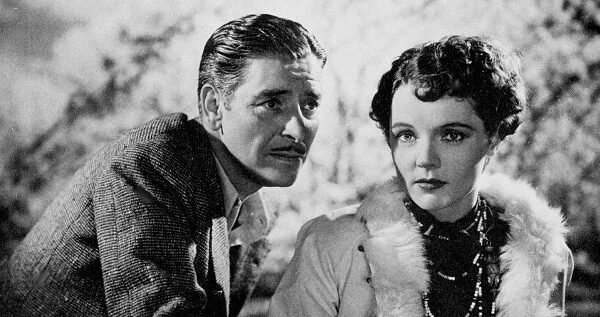
The film’s cast centers on Ronald Colman as Robert Conway, whose calm authority and introspective charm define the story’s moral center. Jane Wyatt plays Sondra, the gentle but resolute woman of Shangri‑La who represents the valley’s hopeful, forward‑looking spirit.
Supporting roles include Edward Everett Horton as the cautious but endearing paleontologist Alexander Lovett and Thomas Mitchell as Henry Barnard, the flawed but redeemable swindler. Isabel Jewell portrays Gloria Stone, whose transformation from terminally ill cynic to rejuvenated believer underscores Shangri‑La’s mysterious healing power.
H.B. Warner appears as Chang, the eloquent guide and steward of Shangri‑La, while Sam Jaffe plays the aged High Lama, whose philosophical speeches articulate the film’s core ideas about restraint, harmony, and cultural preservation. John Howard plays George Conway, whose impatience and skepticism provide the dramatic tension that ultimately shatters the group’s fragile equilibrium.
Over time, “Lost Horizon” has become a landmark of 1930s Hollywood cinema, admired for its ambitious production design and its idealistic vision of a hidden sanctuary beyond war. Its depiction of Shangri‑La helped popularize the very term as a synonym for any remote paradise or personal haven, influencing literature, film, and popular culture for decades.


