
Unprecedented early ISS return disrupts operations, prioritizing crew health amid spacewalk cancellations.
A rare health crisis forces Crew-11’s premature return, canceling spacewalks and reshaping station operations.
NASA has decided to cut short the Crew-11 mission on the International Space Station following a medical issue with one astronaut, marking a historic first in agency operations.
Incident Details
The affected crew member, whose identity and specific condition remain private, is reported stable but requires Earth-based care beyond the station’s capabilities. NASA Administrator Jared Isaacman described it as a “serious medical condition,” prompting a controlled evacuation over a month ahead of the planned late February 2026 return. This follows the cancellation of a January 8 spacewalk by astronauts Mike Fincke and Zena Cardman, intended to upgrade power systems with new solar arrays.
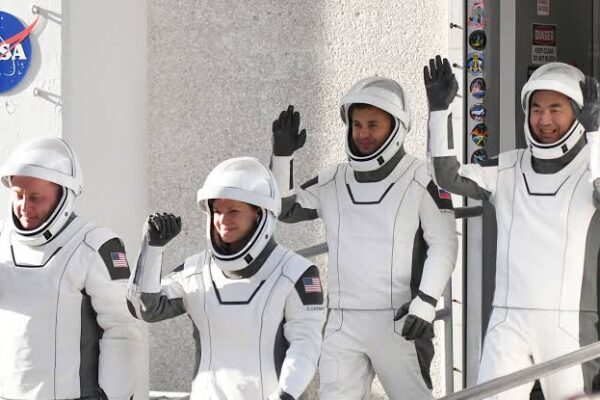
Crew-11 launched August 1, 2025, via SpaceX Dragon from Kennedy Space Center, comprising NASA astronauts Zena Cardman and Mike Fincke, JAXA’s Kimiya Yui, and Roscosmos’ Oleg Platonov for a six-month stint.
NASA’s Response and Prioritization
Chief Medical Officer Dr. James Polk emphasized caution, stating the agency errs on the side of astronaut welfare despite limited onboard risks. The return, set for the coming days as of January 8, avoids full evacuation protocols but leverages routine training for medical scenarios. Three remaining astronauts—NASA’s Williams, and cosmonauts Sergeiev and Kudverchk from a November Soyuz launch—will maintain basic operations until a February SpaceX relief crew arrives.
This leaves the ISS with reduced capacity, potentially delaying scientific experiments and maintenance.
Crew and Mission Background
Veteran commander Mike Fincke, flight engineer Zena Cardman, Kimiya Yui, and Oleg Platonov handled routine tasks like research and upkeep since arrival. The mission supported ISS extension toward 2030 retirement, but the health event overrides all else. NASA confirmed no link to spacewalk prep or station issues, focusing solely on personnel safety.
Historical Significance
Space historian Pearlman notes this as NASA’s first mission truncation for illness in 65 years of human spaceflight, despite past in-orbit health events never warranting early returns. Experts like former ISS engineer Don Platt highlight operational challenges ahead, with science likely paused.
Operational Impacts and Outlook
Post-departure, the skeleton crew prioritizes stability over research, buying time for reinforcements. As of January 10, 2026, splashdown updates continue via live coverage, underscoring space’s inherent risks even in low-Earth orbit. NASA reaffirms safety as paramount, with flight controllers praising the team’s preparedness.


