
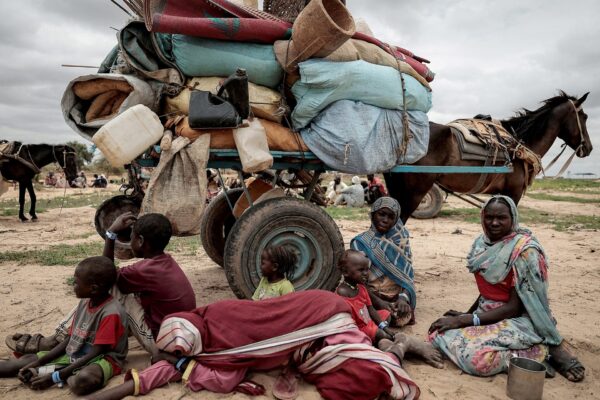
Civil conflict blocks aid in Darfur and Kordofan, leaving 21 million acutely hungry as women and children face unimaginable risks
Millions teeter on famine’s edge in Darfur and Kordofan as conflict blocks aid, displaces families, and devastates harvests, prompting urgent global calls for access.
Sudan’s civil war, raging since April 2023 between the Sudanese Armed Forces (SAF) and Rapid Support Forces (RSF), has triggered the world’s worst humanitarian disaster, with acute hunger engulfing 21.2 million people—half the population—as of September 2025. The Integrated Food Security Phase Classification (IPC) confirms famine in North Darfur’s El Fasher and South Kordofan’s Kadugli, where total livelihood collapse, starvation, and sky-high malnutrition rates claim lives daily.
Famine Declarations and Alarming Statistics
IPC’s November 2025 snapshot reveals stark contrasts: while eastern regions like Khartoum saw marginal improvements post-SAF gains, 19.2 million face acute food insecurity (IPC Phase 3+) heading into 2026, down slightly from summer peaks but with famine risks in 20 Darfur and Kordofan hotspots. Women in female-headed households suffer disproportionately—three times more food insecure—venturing into danger zones for scraps, facing rampant sexual violence. Over 34 million require aid, including half children; 2.11 million kids and 1.15 million pregnant/lactating women battle acute malnutrition nationwide.
Projections warn of deterioration: lean seasons February-May 2026 could spike Phase 3+ to 20+ million amid dwindling stocks and volatile frontlines.
Roots in Relentless Conflict and Blockades
The SAF-RSF power struggle has razed infrastructure, with RSF’s recent El Fasher push displacing thousands to Tawila, worsening siege-like conditions. Besieged areas like Kadugli endure total aid blackouts, while El Fasher’s genocide accelerates hunger. Dry-season offensives loom in Darfur/Kordofan, restricting goods from stable east (Al Jazirah/Sennar), where sorghum/millet yields rise modestly but fail to offset west’s collapse. Hyperinflation, market disruptions, and floods compound woes, echoing 1988 famine scars.
UN experts decry “extreme” crisis, with airstrikes hitting Kosti/El Obeid and RSF looting aid convoys.
Humanitarian Access Nightmares
Aid agencies like WFP and MSF report severe barriers: RSF/SAF checkpoints, violence against workers, and bureaucratic hurdles strand food in Port Sudan. Only 20% of famine-threatened zones receive consistent help; El Fasher’s airport closure exemplifies isolation. Operation Broken Silence notes eastern gains (3.4M fewer hungry post-March 2025 SAF advances) hinge on fragile ceasefires, but RSF momentum risks reversal.
Cross-border ops from Chad/Uganda falter amid insecurity; 9.2M refugees/IDPs strain neighbors.
Vulnerable Groups and Gendered Impacts
Children bear brunt: Global Acute Malnutrition (GAM) exceeds 30% in hotspots, stunting generations. Women forage amid rape epidemics—75% of female-headed homes skip meals. Elderly, disabled face abandonment; urban poor in Omdurman scavenge markets emptied by war profiteers. Pastoralists lose herds to theft/looting, farmers skip planting amid mines.
Glimmers of Hope Amid Despair
Eastern stability yields better 2025 harvests (Al Jazirah up), potentially easing 2M cases early 2026 if corridors reopen. SAF’s Khartoum capture improved aid flow temporarily, dropping peak lean-season figures. WFP/MSF scale nutrition programs, treating thousands, but funding gaps loom—Sudan needs $4.2B for 2026 response.
Global Response and Calls to Action
UN/OCHA urges leverage on warring parties; IGAD/Jeddah talks stall. US/UK sanctions target RSF funders; influencers push #FeedSudan. Experts warn 2026 dry season could mirror Somalia 2011 without access—hundreds of thousands dead plausible.[8][9] As war hits 1,000 days, famine’s shadow grows, demanding ceasefires and unhindered aid now.


