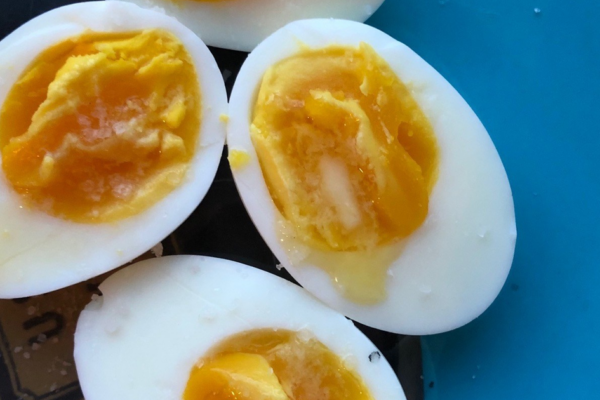
A pinch of baking soda or salt in the pot can mean cleaner peels, more tender whites, and consistent results whether you like your eggs soft, jammy, or hard boiled.
Perfect boiled eggs are one of those deceptively simple kitchen tasks that frustrate beginners and experienced cooks alike. Overcooked gray-ringed yolks, rubbery whites, or shells that cling so stubbornly you lose half the egg can turn a basic breakfast into a minor disaster. Many cooks now swear by adding a small amount of baking soda or salt to the cooking water to fix these issues and get reliable results every time. While opinions differ on which addition is best, both can improve the cooking process when used correctly.
Why an Add-In Helps
Eggshells are made mostly of calcium carbonate, and the white inside is sensitive to both temperature and pH. The fresher the egg, the lower its pH tends to be, and that can make peeling especially difficult because the whites cling more tightly to the inner shell membrane. By slightly altering the water around the egg, you can make the cooking environment more forgiving. That means fewer cracks, easier peeling, and a better texture in the whites and yolks.
Think of the add-in as a small adjustment that shifts the chemistry in your favor. When you add a pinch of baking soda, you raise the alkalinity of the water slightly. When you add salt, you change how proteins in the egg white behave and also affect how the water heats and penetrates the shell. Neither trick is magic, but together with good timing and an ice bath, they can dramatically increase your odds of success.
Baking Soda: Easier-to-Peel Eggs
Baking soda is a common choice for cooks who struggle with hard-to-peel eggs. Because it is alkaline, a small amount in the water raises the pH of the egg white as it cooks. Higher pH weakens the bond between the white and the inner membrane just enough to make peeling smoother. Many people notice that shells slide off more cleanly, with fewer pockmarks and less tearing, especially when using very fresh eggs.
To use this method, add about 1/2 teaspoon of baking soda to a medium pot of water before you bring it to a boil. You don’t need much; too much can give the whites a slightly sulfurous aroma and an odd texture. The goal is a subtle shift, not a dramatic change. After cooking, chilling the eggs in cold water or an ice bath still matters, because it both stops the cooking and causes the egg to contract slightly away from the shell, making the baking soda effect even more noticeable.
Salt: Cleaner Cracks and Better Texture
Salt in boiling water is another time-tested trick. While it does not dramatically change the pH like baking soda, it can help in several ways. First, salting the water slightly increases its density and boiling point, which can make the heating process more uniform around the egg. Second, if an egg cracks during cooking, salt encourages the white to coagulate more quickly, so less of it leaks out and you don’t end up with feathery strands all over the pot.
Using salt is simple: add about 1 to 2 teaspoons of regular table salt or kosher salt to the pot of water before heating. This can also subtly influence the texture of the whites, helping them firm without becoming rubbery when you time the cook properly. Some cooks choose to use both salt and baking soda together in small amounts; others prefer to stick with one approach so they can better predict the results with their specific eggs and stove.
Step-by-Step: Putting the Trick to Work
To get the most from your chosen add-in, you still need a consistent basic method. Fill a saucepan with enough water to cover your eggs by at least 2 to 3 centimeters. Stir in your add-in: either a small pinch of baking soda for easier peeling or a teaspoon or two of salt for neater cooking and better texture. Bring the water to a steady boil before you add fridge-cold eggs, then gently lower them in with a spoon to avoid cracking.
Once the eggs are in, adjust the heat so the water is actively bubbling but not violently rolling. Start your timer immediately. For soft boiled eggs with runny yolks, aim around 6 minutes; for jammy eggs with custardy centers, about 7 to 8 minutes; and for fully hard boiled eggs with set yolks that aren’t chalky, around 10 to 11 minutes. When the time is up, transfer the eggs directly into a bowl of cold water or an ice bath and let them cool for at least 5 to 10 minutes before peeling. This shock step is just as important as what you added to the water.
Choosing Between Baking Soda and Salt
Whether you should add baking soda or salt depends on what frustrates you most about boiling eggs. If your main complaint is that shells stick and you end up mangling the egg while peeling, baking soda is the better choice. It works especially well with eggs that are very fresh or bought recently, where the whites cling stubbornly to the shell. You may find that after a few tries, your peeling becomes almost effortless, with the shell coming off in larger sections instead of tiny shards.
If, on the other hand, you rarely struggle with peeling but often deal with cracked eggs and messy whites leaking into the water, salt might be more useful. The salted water helps quickly set any egg white that escapes, keeping most of the egg intact and improving the overall look. You can also use a combination of a small pinch of baking soda plus salt if you want to hedge your bets, especially when cooking a large batch for a party, salad, or meal prep.
Fine-Tuning for Your Kitchen
Stoves, pots, and even the size and starting temperature of eggs vary from kitchen to kitchen, so a bit of experimentation is unavoidable. Start with a small batch of one or two eggs to test your timing with your preferred add-in. Keep notes: how long you boiled, how vigorous the simmer was, whether you used baking soda or salt, and how easy the eggs were to peel. This makes it simple to adjust by a minute or two the next time instead of guessing from scratch.
Once you dial in the method that works best for your setup, the process becomes almost automatic. You’ll know how many minutes produce your ideal soft, jammy, or hard yolks, and you’ll understand whether baking soda, salt, or both give you the best results. At that point, adding a pinch of one ingredient to the pot becomes just another small habit like preheating the oven that unlocks a big improvement in everyday cooking.