⬤ Watch 🎧Listen
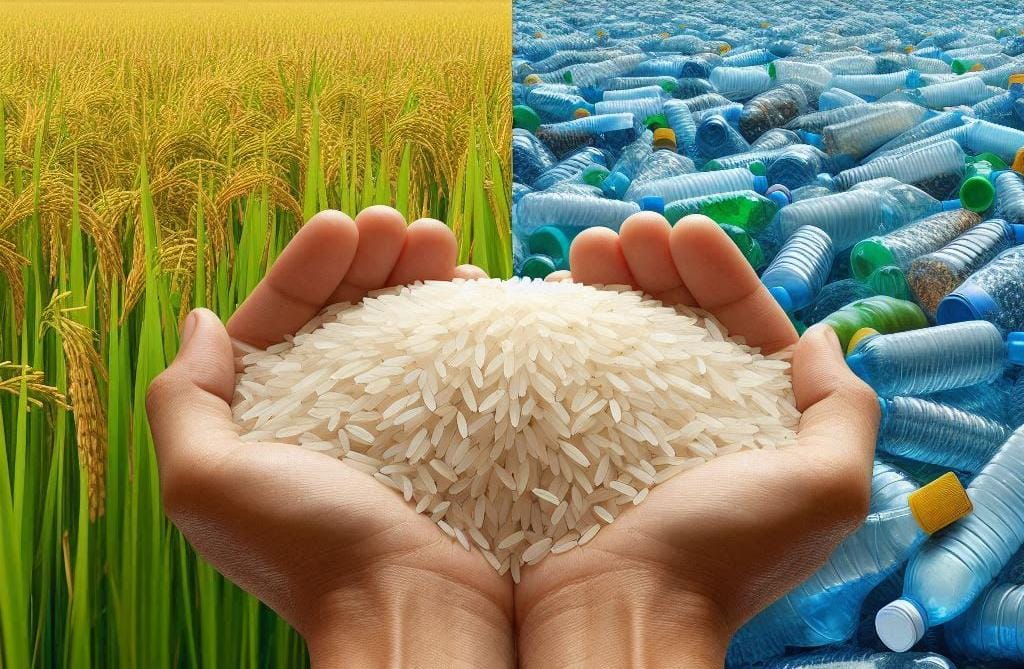
Plastic Rice: A Global Scare, a Local Reality

An in‑depth investigation into the phenomenon, its science, market impact, and how consumers can protect themselves
In recent years, a chilling rumor has circulated across continents: plastic rice grains of rice artificially manufactured from plastic—supposedly infiltrating markets, endangering health, and destabilizing rice economies. The claim, often accompanied by grain‑shaped images and viral videos, has sparked panic among consumers, heated debates among policymakers, and urgent investigations by food safety agencies worldwide. This article delves into the origins of the plastic‑rice scare, the scientific evidence (or lack thereof), documented cases, economic ramifications, regulatory responses, and practical steps for consumers, aiming for a comprehensive, 4,000‑word guide.
1. *The Emergence of the Plastic‑Rice Narrative*
First Reports*
– *2015–2016*: Rumors surfaced in *China* and *India* alleging that cheap rice imports were actually synthetic grains made from recycled plastic.
– *Social media amplification*: Platforms like WeChat, WhatsApp, and Facebook spread videos showing rice “burning” or “melting” like plastic, fueling public fear.
*1.2. Why the Story Gained Traction*
– *Rice as a staple*: Over half the world’s population depends on rice, making any contamination threat highly emotive.
– *Economic stakes*: Rice is a multi‑billion‑dollar global trade; misinformation can collapse markets overnight.
– *Distrust in food supply chains*: In regions with past food‑safety scandals (e.g., melamine in milk), suspicion is already high.
—
2. *What Is “Plastic Rice”?*
*2.1. Hypothetical Composition*
– *Base materials*: Polypropylene, polyethylene, or polystyrene, mixed with starch, coloring, and sometimes a thin coating of wax to mimic the translucent appearance of real rice.
– *Manufacturing theory*: Extrusion or molding processes could shape plastic into rice‑like granules, then possibly treated to achieve similar density and cooking behavior.
*2. Scientific Consensus
– *Major agencies*: The *World Health Organization (WHO)*, *Food and Agriculture Organization (FAO)*, and national bodies (e.g., *USDA*, *EFSA*) have repeatedly stated there is *no credible evidence* of commercially produced plastic rice entering the global food supply.
– *Testing outcomes*: Hundreds of samples analyzed in labs across China, India, Nigeria, and the Philippines using *FTIR spectroscopy*, *X‑ray diffraction*, and *thermal analysis* have consistently identified the grains as *natural rice* or, in a few isolated cases, *non‑rice plant material* (e.g., wild grass seeds).
—
3. Documented Cases and Investigations
Year Country Claim Outcome Methodology
2017 China Viral video claimed rice from Hubei was plastic Negative – Provincial FDA tested 1,200 samples; all were genuine rice. FTIR, burn test, microscopy
2018 India “Plastic rice” circulating in Madhya Pradesh markets Unsubstantiated – FSSAI analyzed 500+ samples; none contained plastic. FTIR, density test
2019 Nigeria Rice imported from Thailand suspected False – NAFDAC lab results showed 100% rice authenticity. Burn test, solubility assay
2020 Philippines Social media post claimed “burning rice” in supermarkets Misidentification – Grains were over‑cooked rice that caramelized, not melted plastic. Visual inspection, cooking test
*Note: In *2019*, a *Vietnamese* company was fined for *re‑using plastic packaging* to store rice, which was misinterpreted as “plastic rice production”; the incident was a contamination case, not synthesis.
4. How Plastic Could (Theoretically) Enter the Rice Supply Chain
– *Post‑harvest contamination*: Plastic debris from packaging, pallets, or farm tools breaking down into fragments.
– *Recycled water*: If irrigation or processing water contains micro‑plastics, trace particles could adhere to rice husks.
– *Intentional adulteration*: Rare, but isolated fraud cases (e.g., adding *polyvinyl alcohol* as a weight enhancer) have been reported in non‑rice commodities.
_These scenarios involve *micro‑plastic* presence, not whole “plastic grains,” and are addressed under broader food‑safety monitoring for micro‑plastics._
5. Economic and Social Impact
5.1. Market Volatility
– *Price swings*: In 2017, *Nigerian* rice prices dropped 15% after a plastic‑rice hoax, then rebounded after official denials.
– *Export bans*: Several Asian countries temporarily halted rice shipments to affected regions, disrupting global logistics.
5.2. Farmer Livelihoods
– Loss of trust: Smallholders in *Myanmar* and *Cambodia* reported delayed purchases and lower farm‑gate prices due to buyer suspicion.
– Compensation claims*: Some governments (e.g., *India*) set up relief funds for farmers impacted by panic buying and market shutdowns.
5.3. Consumer Behavior– *Stockpiling*: Rumors triggered hoarding, exacerbating shortages.
– *Shift to branded products*: Consumers increasingly preferred *certified* or *packaged rice* over loose bulk sales.
—
6. Media, Social Media, and Misinformation
– *Viral videos*: Slow‑motion clips of rice “melting” were often *cooked* in a pan with oil, causing caramelization, not plastic melting.
– *Echo chambers*: Regional language groups shared sensational headlines without verification, leading to rapid regional panic.
– *Fact‑checking initiatives*: Organizations like *Snopes*, *AFP Fact‑Check*, and *Reuters* published debunking articles, yet the rebuttals often received less engagement than the original claims.
7. Regulatory and Institutional Responses
National Food Safety Authorities
China : National Health Commission issued “Guidelines on Testing for Plastic Rice” (2017), mandating FTIR testing for all suspicious samples.
India : Food Safety and Standards Authority (FSSAI) launched a “Plastic Rice Hotline” and conducted nationwide sampling drives.
Nigeria : NAFDAC set up mobile labs in major rice markets for on‑site screening.
International Collaboration
FAO/WHO Codex Alimentarius: Includes *micro‑plastic* monitoring in rice under the Codex Committee on Contaminants (CCCF).
INTERPOL operations: Focus on food fraud networks, sharing intelligence on adulteration trends.
Legal Frameworks
Penalties: In many jurisdictions, spreading false information about food safety can incur fines or imprisonment (e.g., China’s Food Safety Law, India’s IT Act).
Standardization : ISO 22000 (Food safety management) includes risk assessment for foreign material contamination, encompassing plastic.
8. Consumer Protection: How to Identify Genuine Rice
Test Procedure What to Look For
Visual inspection Examine grains on a white plate; look for uniform size, translucency, and a slight brown tip (embryo). Plastic grains are often perfectly uniform, opaque, with no brown tip.
Water test Drop a few grains into a glass of water; genuine rice settles quickly. Plastic may float or suspend due to lower density.
Burn test Place a few grains on a metal spoon, heat gently. Real rice burns with a straw‑like odor, leaving ash. Plastic melts, forms a bead, and emits a chemical smell.
Touch test Rub grains between fingers; rice feels slightly gritty. Plastic feels smooth, sometimes sticky when warm.
Iodine test Add a drop of iodine solution; rice turns dark blue due to starch. Plastic shows no color change.
These simple home tests are preliminary; definitive confirmation requires laboratory analysis.
9. The Bigger Picture: Micro‑Plastic Contamination
Prevalence: Studies in China (2020) found 0.02–0.05 g of micro‑plastics per kg of rice, primarily from packaging and processing equipment.
Health considerations: Current research suggests low risk for most consumers, but ongoing studies monitor long‑term exposure.
Mitigation: Rinse rice thoroughly (3–4 times) before cooking; use filtered water; avoid re‑using plastic cooking utensils.