
⬤ Watch 🎧Listen
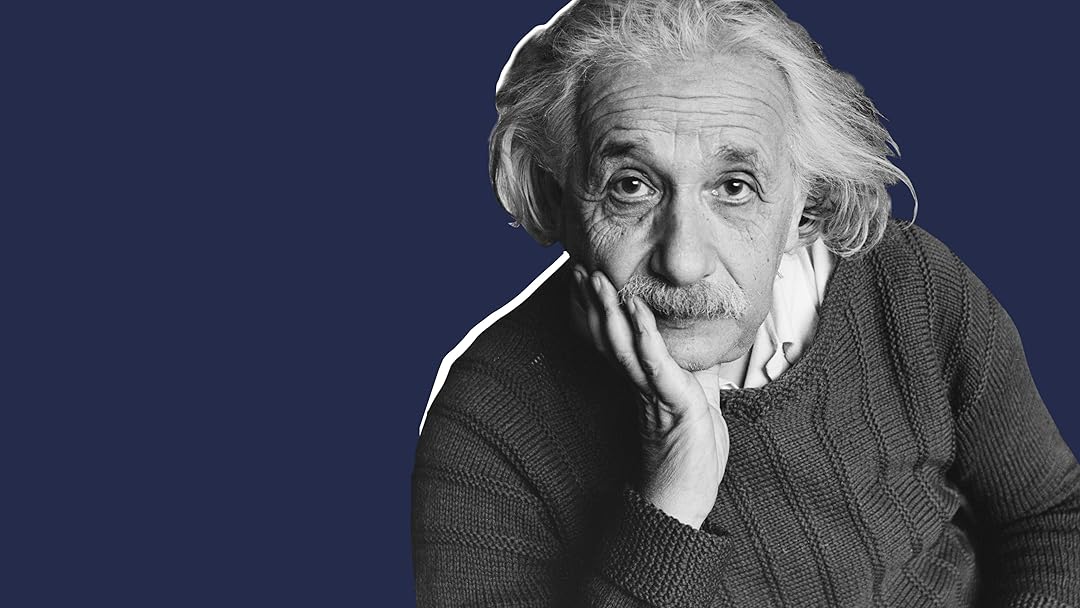
The Dark Side of Albert Einstein: Genius Marred by Cruelty and Prejudice

Einstein’s dark side tyrannical marriages, child neglect, biases, opportunism undercuts his halo, revealing a self-absorbed intellect. Balancing admiration with critique fosters honest history. True genius integrates mind and heart; Einstein’s partial failure reminds us all.
Albert Einstein transformed modern physics with relativity and E=mc², earning a saintly reputation as a pacifist humanitarian. Yet, private correspondences, diaries, and biographies reveal a complex figure marred by misogyny, infidelity, neglect, and prejudices that starkly contrast his public persona.
Early Life and Academic Ruthlessness
Born in 1879 in Ulm, Germany, Einstein showed prodigious talent but clashed with authority. Expelled from school for rebelliousness, he entered Zurich Polytechnic where he met Mileva Marić, the sole female student. Their 1902 romance produced Lieserl, whose existence Einstein concealed; she likely died young or was adopted, with no paternal involvement . Einstein’s sarcasm alienated peers he mocked professors and classmates, prioritizing intellect over collegiality .
Professionally, he skipped classes, relying on Marić’s notes, yet dismissed her contributions later. Early letters credit “our theory,” but post-marriage (1903), she vanished from his papers amid plagiarism accusations from contemporaries .
Marital Tyranny and Serial Infidelity
Einstein’s 1903 marriage to Marić crumbled under his ego. By 1914, he issued a draconian ultimatum: run his household silently, forgo sex, and share no bed essentially servitude for intellectual freedom. Marić, begging for reconciliation, received scorn: “Out of loyalty, I remain with you but sleep alone.” She fled to Zurich with sons Hans Albert and Eduard; divorce finalized in 1919, Nobel funds (1922) going to her as “child support” he evaded emotionally.
Simultaneously, Einstein courted cousin Elsa Löwenthal, overlapping affairs with her daughter Ilse and secretary Anna Meyer-Schmid. He bragged to Elsa’s family of conquests, deeming women “hunting grounds” while viewing Elsa as a “docile housekeeper”. Married in 1919, their union lacked passion; Elsa’s 1936 illness saw Einstein retreat to work and lovers, like Betty Neumann, until her deat
Albert Einstein transformed modern physics with relativity and E=mc², earning a saintly reputation as a pacifist humanitarian. Yet, private correspondences, diaries, and biographies reveal a complex figure marred by misogyny, infidelity, neglect, and prejudices that starkly contrast his public persona.
Early Life and Academic Ruthlessness
Born in 1879 in Ulm, Germany, Einstein showed prodigious talent but clashed with authority. Expelled from school for rebelliousness, he entered Zurich Polytechnic where he met Mileva Marić, the sole female student. Their 1902 romance produced Lieserl, whose existence Einstein concealed; she likely died young or was adopted, with no paternal involvement . Einstein’s sarcasm alienated peers he mocked professors and classmates, prioritizing intellect over collegiality .
Professionally, he skipped classes, relying on Marić’s notes, yet dismissed her contributions later. Early letters credit “our theory,” but post-marriage (1903), she vanished from his papers amid plagiarism accusations from contemporaries .
Marital Tyranny and Serial Infidelity
Einstein’s 1903 marriage to Marić crumbled under his ego. By 1914, he issued a draconian ultimatum: run his household silently, forgo sex, and share no bed essentially servitude for intellectual freedom. Marić, begging for reconciliation, received scorn: “Out of loyalty, I remain with you but sleep alone.” She fled to Zurich with sons Hans Albert and Eduard; divorce finalized in 1919, Nobel funds (1922) going to her as “child support” he evaded emotionally.
Simultaneously, Einstein courted cousin Elsa Löwenthal, overlapping affairs with her daughter Ilse and secretary Anna Meyer-Schmid. He bragged to Elsa’s family of conquests, deeming women “hunting grounds” while viewing Elsa as a “docile housekeeper”. Married in 1919, their union lacked passion; Elsa’s 1936 illness saw Einstein retreat to work and lovers, like Betty Neumann, until her death.
Einstein’s tousled genius image belies a life of calculated emotional detachment and exploitation.
Abandonment of Children
Hans Albert, an engineer, endured Einstein’s criticism dismissing his hydraulic research as trivial. Eduard, musically gifted, descended into schizophrenia by 1921. Institutionalized in 1932, Eduard yearned for his father, who fled Nazis to Princeton in 1933 without visiting. Einstein blamed Marić’s “hereditary taint,” writing coldly: “If I’d known, he wouldn’t exist.” He rejected pleas, funding care minimally while philosophizing detachment.
Hans reconciled somewhat, but Einstein’s absence scarred them, highlighting paternal indifference masked as rationality.
Xenophobic and Misogynistic Diaries
Unpublished until 2018, Einstein’s 1922-1923 Asian travel diaries expose bigotry. In China: “Obtuse, filthy, stunted horde… biologically inferior, supplanting races.” He leered at women as “alluring despite men’s repulsiveness,” affirming male dominance. In Japan: “Childlike, stunted”; Singapore: “Dirty blacks.” Publicly anti-racist (1946 Lincoln University speech), these private rants reveal hypocrisy amid fame.
Misogyny permeated: women as “stupid,” needing subjugation; he cheated brazenly, rationalizing via “free love.”
Ethical Compromises in Science and War
Einstein urged Roosevelt’s 1939 atomic letter, fearing Hitler sparking the Manhattan Project he later decried: “If I’d known, I’d be a shoemaker.” Pacifist pre-WWI (refused military service), he shifted stances pragmatically. Relativity debates credit Marić’s math; he burned letters potentially proving collaboration .
Plagiarism claims linger Minkowski formalized spacetime from Einstein’s ideas; Hilbert vied for field equations. Einstein feuded viciously, alienating collaborators .
Personality Flaws and Social Detachment
Arrogant, Einstein belittled rivals: “God doesn’t play dice” at quantum pioneers. Neurotic hypochondria demanded constant reassurance; FBI surveilled him as a “radical” for socialism and Zionism. He ignored Jewish plight pre-Holocaust, fleeing only after threats, then advocated bombs.
A 2026 analysis notes his “cult of personality” stifled science, per critics. Admirers like Chaplin saw charisma; intimates, cruelty.
Cultural Legacy and Modern Reckoning
Einstein’s flaws humanize genius no one’s infallible. #MeToo-era scrutiny amplifies Marić’s erasure; diaries fuel “cancel Einstein?” debates. Yet, relativity endures. For content creators optimizing sites like Pearl Directory, such topics drive SEO via controversy.
In Uganda’s tech scene, where innovators like Paul Kakumba build directories, Einstein warns: brilliance without ethics erodes legacy.


