 Watch
Watch  Listen


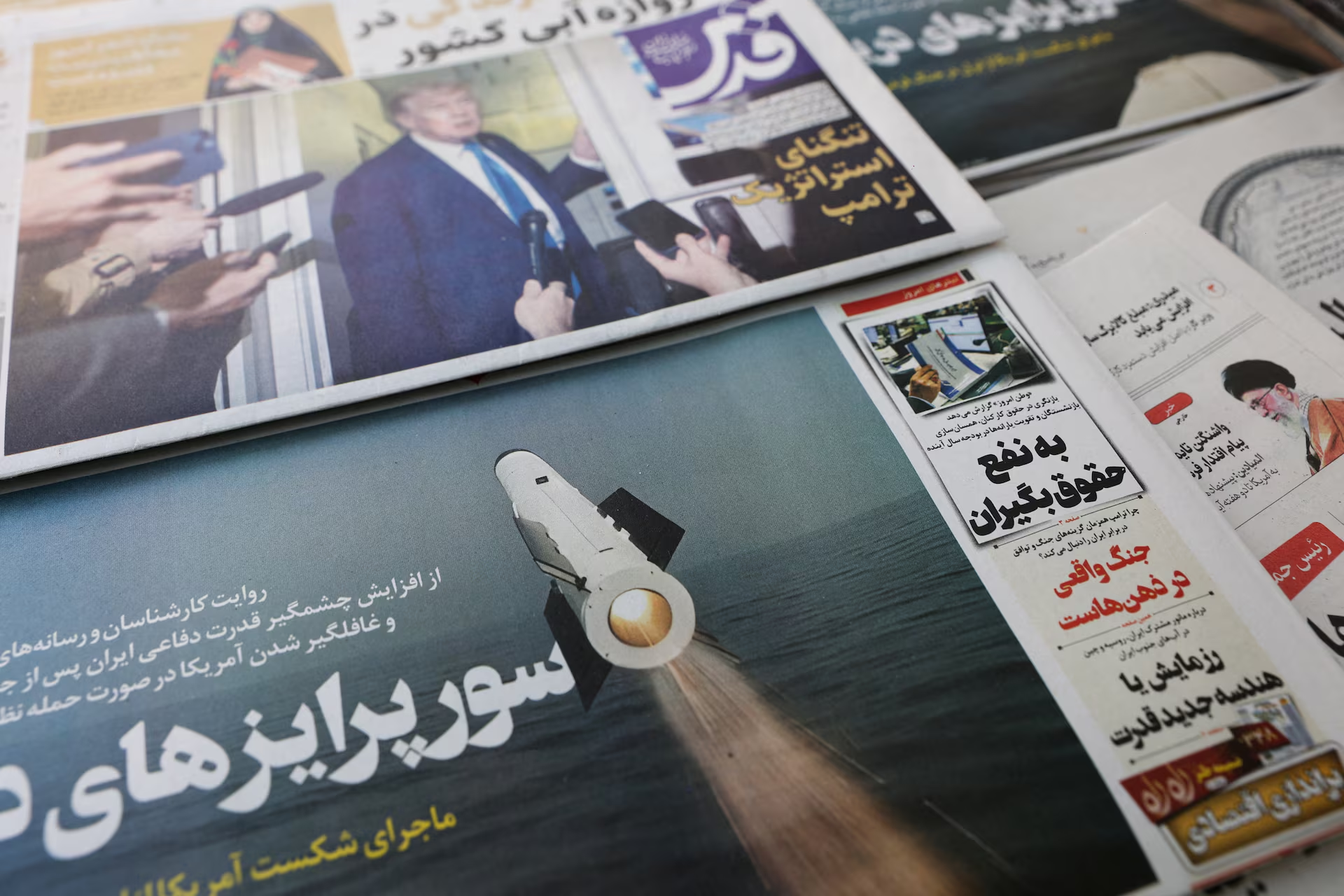
Exclusive: Iran Nears Deal to Buy Supersonic Anti-Ship Missiles from China
Amid rising Persian Gulf tensions and U.S. naval presence, Tehran’s pursuit of advanced YJ-18A weapons signals a strategic shift, alarming Western allies and reshaping regional power dynamics.
Reports from high-level diplomatic sources reveal Iran is finalizing a multimillion-dollar agreement to acquire batches of China’s advanced supersonic anti-ship missiles, potentially altering the balance of power in one of the world’s most volatile waterways. The deal, whispered in Beijing’s backchannels and Tehran’s war rooms, centers on the YJ-18A a sea-skimming beast capable of Mach 3 speeds and 500+ km ranges designed to shred carrier strike groups from afar. As President Trump’s reelection emboldens U.S. carrier patrols in early 2026, this move underscores Iran’s defiance and China’s quiet expansion of influence.
Negotiations, ongoing since late 2025, accelerated post-Houthi Red Sea clashes, where Iranian proxies exposed gaps in Tehran’s naval deterrence. Exclusive insights indicate the Islamic Revolutionary Guard Corps (IRGC) seeks 200-300 units, bundled with tech transfers for local assembly, evading UN sanctions via shadowy ship-to-ship transfers in the Indian Ocean.
The Weapon at the Center: YJ-18A’s Game-Changing Specs
China’s YJ-18A, an export variant of the naval YJ-18, launches from trucks, subs, or warships, hugging waves at subsonic speeds before a supersonic terminal sprint. Packing a 300kg warhead, its active radar and infrared seekers dodge defenses like Aegis systems—making U.S. carriers like the USS Eisenhower prime theoretical targets. Iran already fields subsonic C-802s from China; this upgrade leaps to hypersonic threats, mirroring Russia’s Zircon but at half the cost.
Why now? Gulf drills in January 2026 simulated Hormuz Strait blockades, where supersonic missiles could sink tankers or force naval retreats. Sources say Iran tested reverse-engineered prototypes in the Caspian Sea, but yields Chinese originals for reliability amid domestic sanctions biting production.
Geopolitical Flashpoint: U.S., Israel on High Alert
The deal lands amid Trump’s “maximum pressure 2.0,” with fresh sanctions on IRGC shipyards and carrier groups shadowing Iranian fast boats. Pentagon wargames leaked in February 2026 flag YJ-18A swarms overwhelming F-35 escorts, prompting rushed SM-6 missile upgrades. Israel, eyeing Hezbollah missile caches, views it as an existential red line potentially greenlighting preemptive strikes on Bandar Abbas ports.
China’s role? Officially “defensive sales under WTO rules,” per Beijing spokespeople, but analysts tie it to Belt and Road ports in Gwadar and Chabahar. Post-Ukraine, Xi’s arsenal exports fund PLA modernizations; Iran’s oil flows cheaply to Dalian refineries sweeten the pot. Russia’s sidelined—its hypersonics stalled by sanctions leaving China as Tehran’s premier arms bazaar.
Iran’s Strategic Calculus: Hormuz and Beyond
Tehran frames the buy as “asymmetric deterrence” against “Zionist aggression.” IRGC Navy chief Alireza Tangsiri boasted in state media of “unstoppable volleys,” echoing 2019 tanker drone swarms. With 2 million barrels daily through Hormuz (20% global oil), even a credible threat spikes Brent to $120/barrel hitting U.S. pumps hardest under midterms looming.
Domestically, Supreme Leader Khamenei’s succession whispers demand victories; proxies in Yemen and Lebanon stretch budgets, making cost-effective Chinese gear ideal. Yet risks loom: U.S. interdictions could spark hot war, and reverse-engineering invites Israeli Stuxnet 2.0 sabotage.
China’s Play: Arms as Soft Power Leverage
Beijing’s missile diplomacy echoes 1980s Silkworm sales to Iran, evolving into a web ensnaring Pakistan, Algeria, and now Gulf states. The YJ-18A deal tests post-Brexit UK’s restraint and India’s QUAD pushback, as Chinese frigates shadow U.S. fleets in the Arabian Sea. Critics decry hypocrisy China rails against Taiwan arms sales while arming U.S. foes.
Economically, it’s pragmatic: Iran’s discounted crude offsets tariff wars. Militarily, real-world data from Hormuz drills refines PLA Navy tactics for South China Sea clashes.
Global Ripples and Potential Fallout
Allies scramble: Saudi Arabia eyes French Exocets; UAE accelerates F-35 deals. NATO briefs warn of “axis of autocracy” proliferation, with North Korea lurking as middleman. If inked by Q2 2026, deliveries via Omani waters could arm IRGC speedboats by fall coinciding with U.S. elections.
Diplomatic off-ramps? IAEA talks dangle sanctions relief for missile caps, but trust evaporated post-2018 JCPOA shredding. For now, satellite imagery shows Iranian barges massing near Muscat harbingers of a deal done in shadows.
