
⬤ Watch 🎧Listen
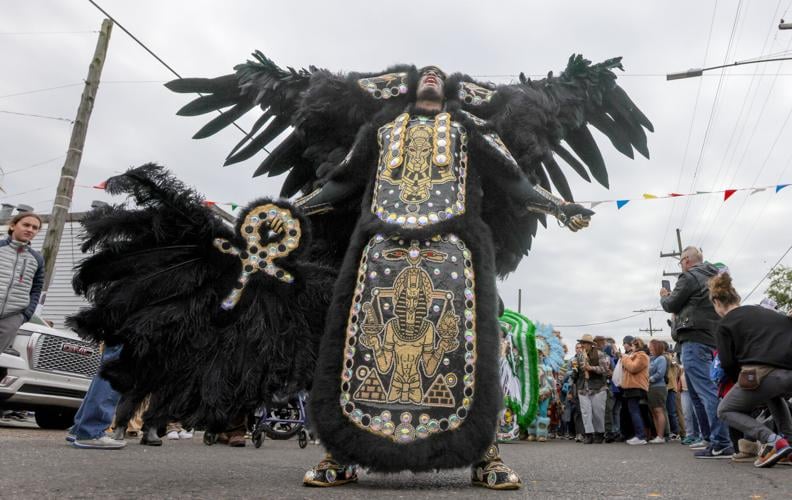
Black Masking Indians Emerge for Mardi Gras Celebration

How New Orleans’ Black Masking Indians keep a 200-year tradition of resistance, remembrance, and radiant art alive each Mardi Gras
Each Mardi Gras morning in New Orleans, before the big parades roll and the floats crowd Canal Street, another, older ritual quietly unfolds in Black neighborhoods from Uptown to the Lower Ninth Ward. As the first light breaks, the sound of drums, tambourines, and chants signals that the Black Masking Indians are emerging, dressed in towering, hand‑sewn suits of beads, rhinestones, and feathers that can take a full year to create. These processions are not just spectacle; they are living acts of memory, honoring the alliances between enslaved Africans and Indigenous peoples and asserting Black cultural power in a city that once tried to ban them from Carnival altogether.
Roots in Resistance and Refuge
The tradition now widely known as Black Masking Indians or Mardi Gras Indians traces back more than two centuries, to an era when enslaved Africans in Louisiana sometimes found refuge with Native American communities who sheltered and protected them. In gratitude and solidarity, Black revelers began to “mask Indian,” adopting Indigenous-inspired regalia and symbols during Carnival to pay tribute to those who had helped them resist enslavement and survive in the Louisiana wilderness.
Archival references from the mid‑18th century mention enslaved people dressing as Indians during Mardi Gras, even as colonial authorities tried to restrict their gatherings. By 1781, Spanish officials in New Orleans had formally prohibited Black people from wearing masks, feathers, or attending night balls, forcing them to move their celebrations into Black neighborhoods and spaces like Congo Square. Despite crackdowns after events like the 1811 slave revolt, the masking tradition survived underground, sustained by oral history, spiritual practices, and family lineages until it resurfaced more visibly in the 19th century, with groups like the Creole Wild West often cited as one of the earliest documented tribes in the 1880s.
Tribes, Roles, and the Language of the Streets
Today, Black Masking Indians are organized into tribes once called “gangs” based in specific neighborhoods, each with its own hierarchy, chants, and visual language. A typical tribe includes roles such as the Big Chief, who leads the group; the Big Queen; the Spy Boy, who scouts ahead; the Flag Boy, who carries the tribe’s banner; and other positions that map both strategy and status.
On Mardi Gras Day, Super Sunday, and selected feast days, these tribes take to the streets in carefully choreographed “runs.” When two tribes meet, what was once a moment of potential violence has evolved into ceremonial confrontation, a ritualized battle of beauty and bravado. Instead of weapons, they wield visual artistry and song: “prettier” suits, more intricate beading, richer storytelling in their designs. The famous call‑and‑response “Who’s the prettiest?” is both playful challenge and a declaration of presence and pride in communities long marginalized by the city’s official Mardi Gras krewes.
Suits as Sacred, Living Art
The heart of the Black Masking tradition lies in the suits themselves: monumental, hand‑crafted artworks composed of dense beadwork, sequins, rhinestones, velvet, and towering ostrich plumes. Many maskers spend 10–12 months sewing each year, often working every night, to produce just one suit that they may only wear a handful of times before retiring or radically reworking it. The designs are never arbitrary; they tell stories of African deities, Native resistance, historical battles, or personal and community histories packed into panels of beads that can weigh tens of kilograms.
Scholars note that this aesthetic draws heavily from West African masquerade traditions, in which masking is a sacred act that channels spirits, ancestors, and deities through costume and performance. Over time, Black Masking suits have incorporated imagery from Yoruba orishas like Elegba and Shango, Pan‑African symbolism, Black Power iconography, and even Egyptian motifs, merging them with Indigenous patterns and European parade influences. In this way, each Mardi Gras suit becomes a wearable archive, stitching together centuries of African, Indigenous, Caribbean, and American history into a single moving artwork.
Carnival on the Margins of the Mainstage
While mainstream Mardi Gras krewes in New Orleans historically excluded Black participants and maintained segregated, whites‑only organizations well into the 20th century, Black residents built their own Carnival traditions in parallel, including second lines, Skull and Bones gangs, and Black Masking Indians. For decades, these celebrations took place largely out of sight of tourists and official parades, in backstreets and housing projects rather than on the grand avenues.mardigrasneworleans+3
That semi‑hidden status was partly by design. The Indians maintained a degree of secrecy to protect the sanctity of their rituals and to avoid police harassment, especially in earlier periods when gatherings of Black men in elaborate costume could be perceived as threatening. Even today, many tribes do not formally publish their routes, preferring that those who see them have made the effort to seek them authentically in the neighborhoods rather than treat them as another tourist spectacle.arlingtondiocese+4
At the same time, recognition of Black Masking culture as a vital, original New Orleans art form has grown. Cultural institutions, museums, and festivals now highlight Indian suits as examples of some of the most important contemporary African diasporan art in the United States, with master maskers receiving national honors and fellowships for their work.
Spirituality, Memory, and Community Power
Beyond the feathers and fanfare, Black Masking Indians are deeply rooted in spirituality and collective memory. The practice emerged when African religious ceremonies were suppressed, forcing enslaved and free Black people to fold their beliefs into Catholic festivals and European holidays like Mardi Gras. Masking offered a way to continue African ritual drumming, dance, song, ancestor reverence under the guise of Carnival, allowing practitioners to honor their heritage while navigating colonial and later Jim Crow restrictions.
By masking as Indians, Black communities also honored historic alliances with Indigenous nations who provided sanctuary to escapees from slavery, shared land and knowledge, and resisted colonial power. The suits’ motifs arrows, headdresses, buffalo, and more recent Pan‑African imagery encode these stories of solidarity and survival, making each Mardi Gras appearance an act of remembrance. Today, Black Masking Indians also carry messages about contemporary struggles, from police violence to gentrification, reminding New Orleans that the past is never really past.
Black Masking Indians in Today’s Mardi Gras
In the 21st century, Black Masking Indians remain a vital part of New Orleans’ Carnival landscape. Tribes appear on Mardi Gras Day, St. Joseph’s Night, and Super Sunday, as well as at select cultural events and museum exhibitions that aim to present the tradition on its own terms. Younger generations are learning beading techniques, songs, and the unwritten rules of tribal etiquette from elders, ensuring that the culture continues to evolve rather than ossify.
At the same time, debates around naming and representation continue. Some critics question whether terms like “Mardi Gras Indians” obscure the tradition’s African American roots or unintentionally reinforce stereotypes about Native peoples, leading many practitioners and scholars to favor “Black Masking Indians” as a more precise, respectful label. Yet across these conversations, there is broad agreement on one point: this is not a costume for a party, but a sacred art form born from centuries of oppression, resistance, and creativity.
As another Mardi Gras dawns and Black Masking Indians emerge once more suits gleaming, chants rising, children watching wide‑eyed from stoops the streets of New Orleans become a living museum and a moving altar. In every bead, feather, and step, they tell a story: of ancestors who refused to disappear, of cultures that refused to die, and of a city whose truest history often starts not on the grandstands, but in the neighborhoods where the drums begin to play.


