
⬤ Watch 🎧Listen
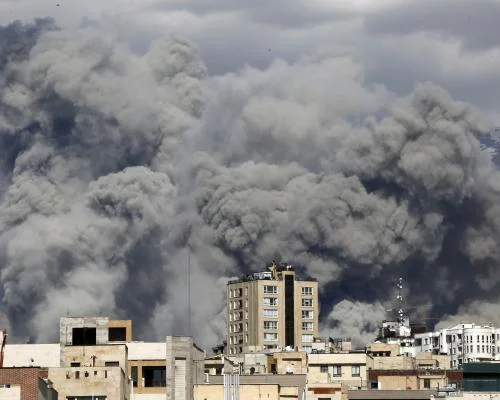
Israel and Iran Launch New Strikes as US Reports First Casualties

Escalation in the Middle East
Joint US-Israeli operation intensifies amid Iranian retaliation, with rising death
Israel and Iran exchanged fresh volleys of strikes on March 1, 2026, marking the second day of intense hostilities following a joint US-Israeli assault on Iranian targets. The US confirmed its first casualties three service members killed and five seriously injured while Iran’s retaliation hit Israeli cities and US bases across the Gulf, exacerbating fears of a wider regional war.
Timeline of the Conflict
The crisis erupted on February 28, 2026, when Israel and the US launched “Operation Roaring Lion” and “Operation Epic Fury,” targeting Iranian military sites, nuclear facilities, and leadership in cities like Tehran, Isfahan, and Qom. Strikes killed Supreme Leader Ali Khamenei, Defense Minister Aziz Nasirzadeh, IRGC commander Mohammad Pakpour, and others, including former President Mahmoud Ahmadinejad.
Iran responded swiftly with drones and ballistic missiles aimed at Israel, US bases in Bahrain, Qatar, UAE, Kuwait, and Saudi Arabia, as well as civilian areas. By March 1, new Israeli strikes hit Tehran’s defenses and infrastructure, while Iranian missiles struck Beit Shemesh in Israel, killing nine and injuring dozens.
Casualties and Humanitarian Impact
Iran reported over 200 dead and 747 injured from initial strikes, including 148 students in a Minab school airstrike, though numbers vary by source. In Israel, at least 14 fatalities and hundreds injured from Iranian barrages, with one woman killed in Tel Aviv.
US Central Command verified three troops killed at bases like Naval Support Activity Bahrain, contradicting Iran’s claim of 560 casualties. Gulf states saw indirect hits: three foreigners killed in UAE, injuries in Kuwait and Bahrain from debris and drones. Rescue operations continue amid blackouts and evacuations in Tehran.
| Side | Confirmed Deaths | Injuries | Key Incidents |
|---|---|---|---|
| Iran | 201+ (civilians/military) | 747+ | Minab school (148 dead), Khamenei compound |
| Israel | 14+ | 390+ | Beit Shemesh missile (9 dead), Tel Aviv shrapnel |
| US | 3 | 5 serious | Gulf bases under missile fire |
| Gulf States | 3+ foreigners | 100+ | UAE, Bahrain debris strikes |
Strategic Targets and Military Moves
Israel’s largest-ever sortie 200 jets dropping 1,200 bombs neutralized air defenses, missile sites, and IRGC bases, with cyberattacks urging Iranian uprising. US B-2 bombers and Tomahawks from carriers like USS Abraham Lincoln hit fortified sites.
Iran’s counterstrikes targeted Israel’s defense HQ, US Fifth Fleet in Bahrain, and airports in Kuwait/UAE, using ballistic missiles and Shahed drones; claims of hitting USS Abraham Lincoln were denied. Strait of Hormuz closure stalled 150 oil tankers, spiking global energy fears.
President Trump posted on Truth Social that strikes are “ahead of schedule” to dismantle Iran’s regime, while Netanyahu called it preemptive against nuclear threats. Iran vowed “unrelenting response,” forming a temporary leadership council.
Background and Spark
Tensions built from decades of proxy wars, 2024-2025 direct clashes, and Iran’s crackdown on protests killing thousands. Trump amassed forces post-protests, amid failed Oman/Geneva nuclear talks where Iran allegedly hid enriched uranium.
Strikes followed IAEA concerns and lobbying from Saudi Arabia/Israel, overriding warnings of no imminent Iranian attack. Trump framed it as regime change aid for Iranians, citing “Death to America” chants.
Global Reactions
UN Secretary-General Guterres condemned strikes as destabilizing; Gulf states like Saudi Arabia vowed defense, intercepting missiles. Iranian diaspora celebrated Khamenei’s death with rallies; opposition figures like Reza Pahlavi pushed transitional plans.
US Republicans largely backed Trump, but Democrats and some GOP criticized lack of Congress approval. Airlines suspended Middle East flights amid airspace closures; oil markets braced for surges.
Economic and Regional Fallout
Strait disruptions threaten global oil; Tehran saw panic buying, internet blackouts to 4% capacity, and celebratory protests met with security fire. Israel mobilized 70,000 reservists, closed schools; Houthis resumed Red Sea attacks.
As strikes persist into March 1 evening, Trump hinted at negotiations post-attacks, but escalation risks draw urgent UN Security Council calls. The conflict, rooted in nuclear fears and proxies, now hinges on Iran’s fractured leadership response.


