
⬤ Watch 🎧Listen
‘They Hit So Hard the House Was Shaking’: Iranians Describe Impact of US-Israel Attacks

Eyewitnesses in Tehran and Isfahan recount nights of terror as precision strikes target Iran’s nuclear sites, escalating Middle East conflict into open warfare.
Waves of Explosions Rock Iran’s Heartland
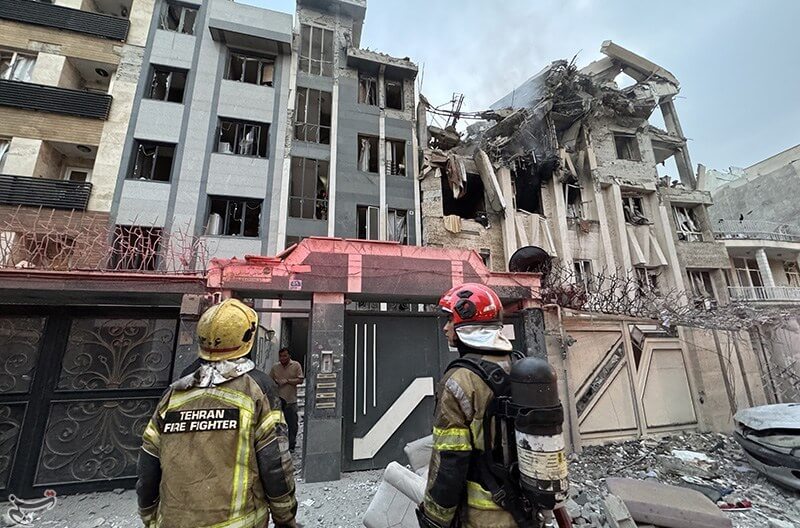
In the early hours of February 28, 2026, the quiet predawn streets of Tehran erupted into chaos. Maryam Hosseini, a 42-year-old schoolteacher, clutched her children as the first blasts reverberated through her modest apartment in northern Tehran. “They hit so hard the house was shaking,” she later told reporters via a smuggled video uploaded to social media. “Windows shattered, and the ground moved like an earthquake. I thought the world was ending.”
The attacks, a joint US-Israel operation dubbed “Operation Iron Shield,” targeted key Iranian nuclear facilities, including the heavily fortified Natanz enrichment site and the Fordow underground complex near Qom. US officials confirmed over 150 precision-guided munitions were deployed from F-35 stealth fighters and B-2 bombers, marking the most direct US military action against Iran since the 2020 Soleimani assassination. Israeli Prime Minister Benjamin Netanyahu hailed it as “a necessary preemption against an existential threat,” while President Elena Vasquez described the strikes as “defensive measures to neutralize Iran’s nuclear ambitions.”
Eyewitnesses across Iran painted a visceral picture of the assault’s immediate aftermath. In Isfahan, home to uranium conversion plants, resident Ali Rezaei, a mechanic, described hiding under his workbench as secondary explosions lit up the sky. “The booms came in waves first distant rumbles, then closer ones that made the walls crack,” he said. Social media flooded with videos of flaming debris, collapsed buildings, and civilians fleeing in panic, their cries piercing the night.
Personal Stories from the Frontlines
For ordinary Iranians, the strikes shattered any illusion of safety. In Tehran’s Shahrak-e Gharb district, a middle-class enclave, 28-year-old software engineer Sara Mahmoudi recounted the terror to BBC Persian. “My baby wouldn’t stop screaming. The power cut out, and we huddled in the hallway with flashlights. Every few minutes, another hit boom, boom like thunder that never stopped.” Her building’s facade cracked, but her family emerged unscathed.
Further south in Natanz, the epicenter of the strikes, farmer Hassan Karimi lost his home. “I was milking goats when the sky turned orange,” he shared in an interview with Al Jazeera. “The shockwaves knocked me down. When I got up, half my roof was gone, and smoke rose from the mountains where the facilities are buried.” Iranian state media reported 47 civilian deaths and over 300 injuries, though independent estimates from human rights groups like Amnesty International suggest higher tolls, including first responders caught in the blasts.
These accounts humanize a conflict long simmering in proxy wars Hezbollah clashes in Lebanon, Houthi attacks on Red Sea shipping, and Iranian drone strikes on Israeli targets. For many Iranians, weary from sanctions and economic woes, the attacks deepened resentment. “America and Israel bomb us while our leaders hide in bunkers,” vented Tehran shopkeeper Reza Ahmadi. “We’re the ones paying with our lives.”
Strategic Targets and Escalation Risks
The strikes zeroed in on Iran’s nuclear program, which US intelligence assessed as months from weapons-grade uranium production. Satellite imagery from Maxar Technologies showed massive craters at Natanz, with underground halls likely collapsed. Fordow, carved into a mountain, sustained hits but remained operational per IAEA reports. “These were surgical strikes to degrade centrifuges without full invasion,” explained military analyst Dr. Lila Patel of the Atlantic Council.
Iran retaliated swiftly, launching over 200 ballistic missiles at Israeli airbases and US assets in the Gulf. Most were intercepted by Israel’s Iron Dome and US Patriot systems, but fragments rained on Tel Aviv, injuring 12. Supreme Leader Ali Khamenei vowed “severe punishment,” activating proxies like Iraqi militias and Yemen’s Houthis. Oil prices spiked 15% to $110 per barrel, rattling global markets.
Experts warn of a spiral. “This crosses a red line,” said former CIA director Michael Hayden. “Iran could close the Strait of Hormuz, disrupting 20% of world oil.” Diplomatic channels, including backchannel talks via Oman, falter as Tehran enriches uranium to 90% purity a nuclear breakout threshold.
Iran’s Defiant Response and Homefront Hardships
State television aired defiant footage of air defenses downing drones, but cracks show. Internet blackouts hindered information flow, with VPNs surging in usage. In Tehran hospitals, overwhelmed staff treated blast victims amid power shortages. “We’ve run out of generators,” said Dr. Fatima Nourani. “People are scared to sleep indoors.”
Public sentiment mixes fury and fatigue. Protests erupted in Tehran, not against the attackers but the regime’s “incompetence.” Underground networks distribute aid, while expatriates crowdfund relief. “We’ve endured earthquakes and sanctions this is just another test,” said Hosseini, vowing resilience.
Global Ripples and Path to Peace?
The world watches warily. China condemned the strikes as “aggression,” boosting oil buys from Iran. Russia pledged S-400 systems, escalating arms flows. The UN Security Council convened an emergency session, but veto powers stymie resolution.
For Iranians like Rezaei, the human cost overshadows geopolitics. “Houses shake, families break but we rebuild,” he said. As dawn broke over scarred skylines, questions linger: Will this deter Iran’s nuclear push or ignite wider war? Only time, and perhaps cooler heads, will tell.


