
⬤ Watch 🎧Listen
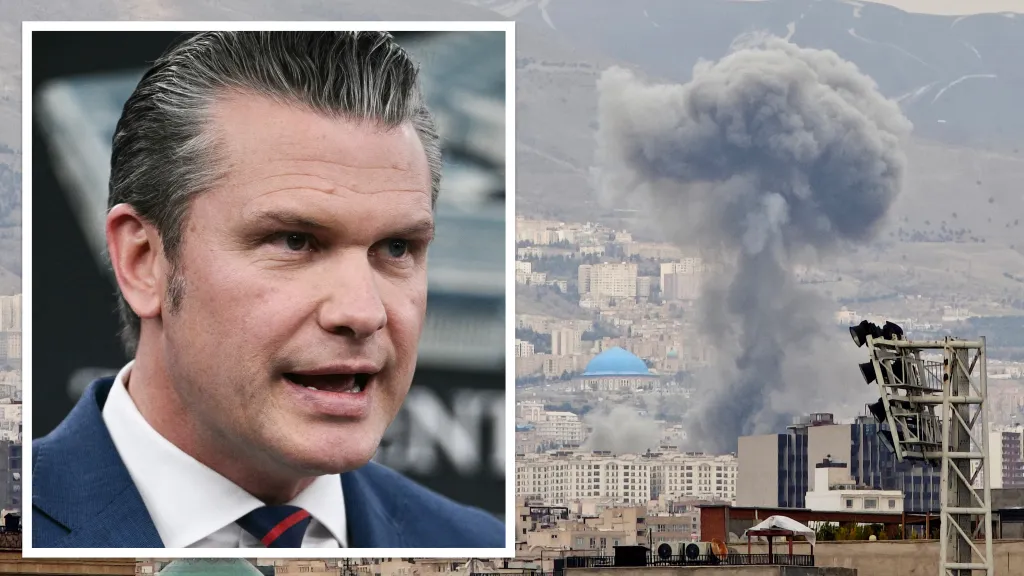
Explosions Rock Tehran as Hegseth Warns of ‘Most Intense’ Day of Strikes on Iran Yet

U.S. Defense Secretary’s stark prediction amid escalating aerial assaults signals potential turning point in Middle East conflict
Explosions lit up the night sky over Tehran late Tuesday, sending plumes of smoke rising from key military and industrial sites as U.S. Defense Secretary Pete Hegseth declared the day the “most intense” barrage against Iran so far. Eyewitnesses described deafening blasts shaking residential neighborhoods, with Iranian state media confirming strikes on air defense batteries and suspected nuclear facilities. Hegseth’s comments, delivered during a Pentagon briefing at around 2:55 PM EAT, underscore a dramatic escalation in the ongoing U.S backed campaign against Tehran’s nuclear ambitions and regional proxies.
The strikes mark the third week of sustained operations, which began in early February following intelligence reports of Iran enriching uranium to near-weapons-grade levels. U.S. and Israeli warplanes, supported by B-2 stealth bombers from Diego Garcia, targeted over 40 sites across central Iran today alone. Satellite imagery from Maxar Technologies shows craters at the Natanz enrichment complex and damage to IRGC missile depots near the capital. Iranian officials claim at least 12 deaths, including high-ranking Revolutionary Guard commanders, though independent verification remains elusive amid blackouts in state reporting.
Hegseth, speaking from the Pentagon, pulled no punches. “Today will be the most intense day of strikes on Iran so far,” he stated, flanked by Joint Chiefs Chairman Gen. CQ Brown. “We’re dismantling their nuclear network and proxy terror machine piece by piece. Tehran needs to understand: this isn’t a drill.” His words echo President Trump’s renewed “maximum pressure” doctrine, revived after his 2024 reelection, which has seen U.S. forces surge to 50,000 in the region.
Escalation Timeline
The path to these explosions traces back months of proxy clashes. Hezbollah rocket fire from Lebanon in late 2025 prompted Israeli preemptive strikes, drawing in U.S. assets. Iran’s direct missile barrages on Israel in January 2026 crossed a red line, prompting covert sabotage that evolved into open air campaigns.
- Week 1 (Feb 3-9): Precision hits on IRGC drone factories in Isfahan; minimal civilian impact.
- Week 2 (Feb 10-16): Broader assaults on Quds Force bases; Iran retaliates with Houthi-coordinated Red Sea disruptions.
- Today (March 10): Peak intensity with 120+ sorties, focusing Tehran’s defenses.
Casualty figures vary wildly. Tehran reports 150+ killed since inception, while U.S. Central Command pegs enemy losses at 400 combatants. Civilian tolls, including from a strike near Karaj that hit a fuel depot, fuel anti-war protests in Iran’s streets—rare sights captured on smuggled social media videos.
Strategic Implications
Why now? Analysts point to intercepted chatter suggesting Iran was weeks from a bomb test. Hegseth hinted at “irrefutable” intel during his briefing, possibly from Mossad penetrations. The strikes aim to neutralize S-300 systems, paving for deeper incursions. “We’re flying with total air superiority,” a U.S. Air Force colonel told reporters off-record.
Iran’s response has been muted but ominous. Supreme Leader Ali Khamenei vowed “rivers of blood” in a prerecorded address, while Foreign Minister Abbas Araghchi appealed to the UN for intervention. Proxy militias in Iraq and Yemen fired salvos at U.S. bases, killing two service members yesterday. Oil prices spiked 8% to $95/barrel on fears of Strait of Hormuz closure, rattling global markets.
Regionally, Saudi Arabia quietly cheers, having normalized ties with Israel under Abraham Accords 2.0. Turkey’s Erdogan condemned the “Zionist aggression,” offering Tehran mediation. In Kampala, Uganda’s Foreign Ministry urged de-escalation, citing risks to East African energy imports.
Voices from the Ground
In Tehran, resident Amir Hosseini shared via VPN: “The sky is on fire. We hear jets constantly it’s terrifying.” U.S. expats in Dubai report packed flights out of the Gulf. Hegseth addressed allies: “Nations standing with terrorists will face consequences.” His rhetoric recalls his Fox News days, blending hawkishness with resolve.
Critics at home decry the costs $2 billion daily, per CBO estimates and warn of quagmire. Sen. Tim Kaine (D-VA) called for congressional approval, invoking War Powers Resolution. Yet polls show 62% American support, buoyed by no U.S. ground troops.
Looking Ahead
As dawn breaks over smoldering Tehran, questions loom. Will Iran fold or unleash asymmetric hell? Hegseth teased “Phase Two” involving cyber ops and special forces. Diplomatic off-ramps, like Oman-brokered talks, flicker dimly. For now, the explosions signal a conflict entering uncharted fury one that could reshape the Middle East for decades.


